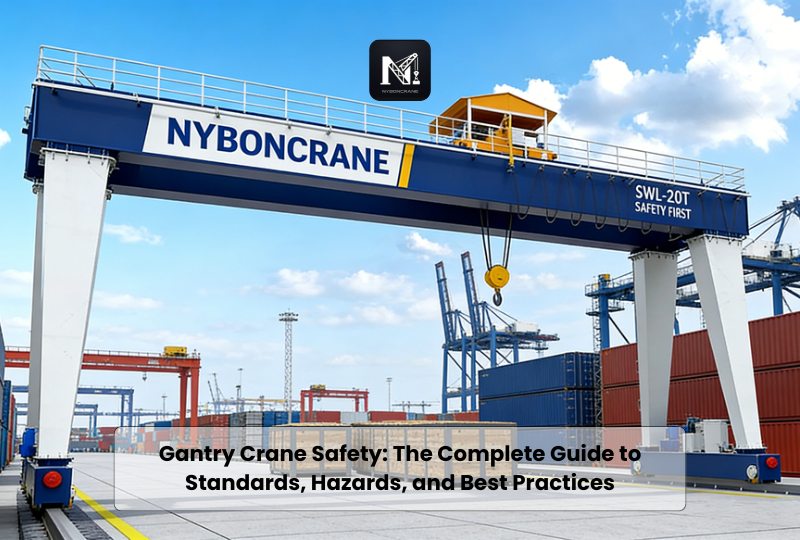
Gantry crane safety means following a set of standards, equipment features, and daily practices that prevent overloading, collisions, falling loads, and structural failure. It covers everything from OSHA and ASME regulations to operator training, routine inspections, and the built-in safety devices that stop accidents before they happen. Any facility running a gantry crane in China, whether it is a small workshop or a busy container yard, needs all of these pieces working together.
I will walk through each layer of gantry crane safety 🙂. You will find the applicable standards, the hazards that cause most incidents, gantry crane devices that protect operators and workers, and the daily habits that keep a crane running safely for years.
What Is Gantry Crane Safety and Why It Matters
A gantry crane is a heavy lifting machine supported by two or more legs that travel on rails or wheels, rather than being mounted on an overhead runway like a standard bridge crane. Because gantry cranes often work outdoors, handle very heavy loads, or operate in busy yards alongside people and vehicles, the safety requirements go beyond what a typical indoor hoist needs.
Poor gantry crane safety leads to real consequences. A dropped load can crush equipment or injure a worker in seconds. A structural failure from overloading can shut down a site for weeks. An electrocution from contact with an overhead power line can be fatal. Most of these incidents are preventable with the right combination of equipment, training, and procedure, which is exactly what this guide covers.
Governing Standards and Regulations
Gantry crane safety in most industrial markets is built around a small set of core standards.
OSHA 1910.179 covers overhead and gantry cranes in general industry, setting requirements for markings, inspections, testing, maintenance, and operator qualification.
ASME B30.2 is the technical standard most crane manufacturers and inspectors reference. It defines construction, installation, operation, inspection, and maintenance requirements for hand-operated and power-driven overhead and gantry cranes, including cantilever and semi-gantry designs.
CMAA specifications (Crane Manufacturers Association of America) add engineering detail on duty class, structural design, and mechanical components, which is useful when selecting a crane for a specific service level.
Many countries, including China, follow the US-equivalent local codes, but the underlying safety principles, rated capacity, inspection frequency, and qualified operation remain consistent across regions. Facilities that operate internationally usually design their safety programs to meet the strictest applicable standard.
Common Gantry Crane Hazards
Understanding what actually causes accidents is the first step in preventing them.
Overloading is the single biggest cause of gantry crane structural failure. Lifting beyond the rated capacity puts stress on the girder, legs, and wire rope that the crane was never designed to handle, and it can lead to tipping or a sudden structural break.
Two-blocking happens when the hook block travels too high and collides with the trolley or hoist housing. This can snap the wire rope and drop the load without warning.
Swinging or uncontrolled loads occur when a load is lifted too fast, moved without tag lines, or rigged off-center. A swinging load can strike workers, structures, or other equipment.
Collisions are common in yards where multiple cranes share the same rail track, or where a gantry crane operates near forklifts, trucks, and pedestrians. Limited operator visibility makes this worse.
Contact with power lines remains one of the deadliest crane hazards. Outdoor gantry cranes working near overhead electrical lines need a planned safe distance and, where possible, physical barriers or spotters.
Falling objects and pinch points affect anyone working near the load path or around moving components like trolleys, wire rope, and end trucks.
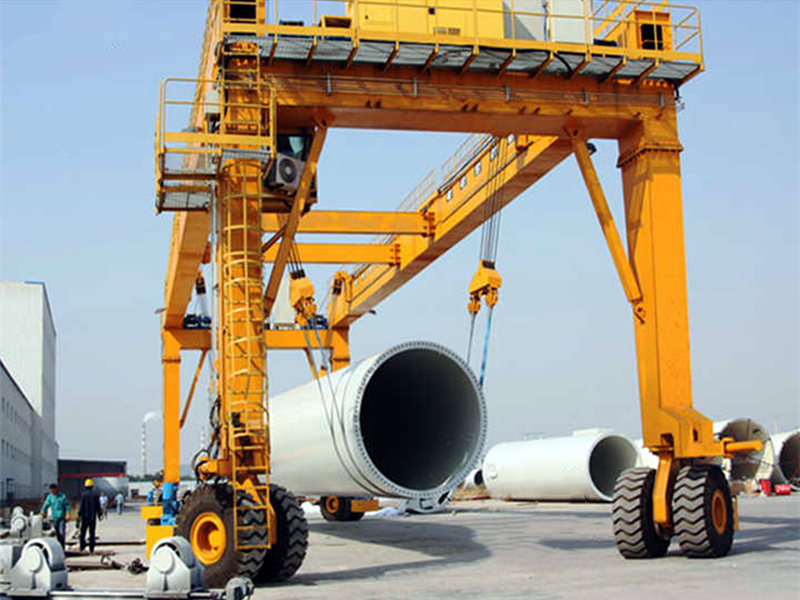
Wind exposure is a specific risk for outdoor gantry cranes such as rubber-tyred gantry cranes and rail-mounted gantry cranes. High wind can cause load swing, reduce stability, or push an unsecured crane along its rail track when it is out of service.
Built-In Safety Devices in Gantry Cranes
Modern gantry cranes rely on a layered set of protective devices rather than a single safeguard.
Overload protection systems monitor the load weight in real time and stop hoisting once the rated capacity is reached, preventing the operator from lifting beyond safe limits.
Limit switches stop hoist, trolley, and bridge travel at the end of their range, which prevents two-blocking and over-travel collisions.
Anti-collision devices use sensors to detect another crane or obstruction on the same rail and automatically slow or stop travel before contact happens.
Rail clamps and storm anchors lock an outdoor gantry crane to its rail track during high wind or when the crane is parked, stopping unplanned movement.
Wind speed sensors (anemometers) are standard on outdoor gantry cranes and alert operators when wind conditions approach the crane’s rated limit, so operations can pause before conditions become unsafe.
Buffers and end stops absorb impact if a crane does reach the end of its rail track, reducing damage and protecting the structure.
Emergency stop controls allow an operator or nearby worker to immediately cut power to all crane motion in a dangerous situation.
Audible and visual warnings, including horns, sirens, and beacon lights, alert workers in the area before and during crane movement.
At Nybon Machinery, these protective systems are engineered into every gantry crane line we build, from single girder units to rail-mounted container gantry cranes, so safety is part of the equipment from day one rather than an afterthought.
Operator Training and Certification
A well-built crane is only as safe as the person operating it. Operators need formal training that covers the specific crane type they will run, its controls, its load charts, and its emergency procedures. In many regions, this training must lead to a recognized certification, such as one issued by a national crane operator certification body, before an operator is allowed to work unsupervised.
Refresher training matters just as much as initial certification. Operators should be re-evaluated periodically, and any time they move to a new crane model or a significantly different work environment. Signal persons and riggers working alongside the crane also need training, since miscommunication between the operator and ground crew is a common root cause of incidents.
Pre-Operational and Routine Inspections
Inspections are where most preventable failures get caught before they turn into accidents. There are generally three levels.
Daily or pre-shift inspections are a quick visual and functional check done by the operator before use, covering brakes, controls, warning devices, hooks, and visible wear on the wire rope.
Frequent inspections happen on a set schedule, often monthly, and go deeper into mechanical components, safety devices, and structural connections.
Periodic inspections, typically annual, are more thorough and are often performed or reviewed by a qualified third-party inspector, covering structural members, electrical systems, and load-bearing components in detail.
A simple daily checklist should include wire rope condition, hook and latch function, limit switch operation, brake performance, unusual noise or vibration, and visible damage to the rail track or wheels. Any defect found should take the crane out of service until it is repaired and re-inspected.
Safe Lifting and Rigging Practices (By Operators)
Even a well-maintained crane can cause an accident if the load is rigged or handled incorrectly.
Operators should always check the crane’s load chart before a lift and confirm the load weight, including slings and rigging hardware, stays within rated capacity. Sling angles matter more than most operators expect, since a narrow angle between slings dramatically increases the load on each leg.
Loads should be lifted vertically, never dragged or side-pulled, and the load’s center of gravity should be centered under the hook before it leaves the ground. Tag lines help ground crew control load rotation and swing without putting hands near the load itself. A designated signal person, using clear hand signals or radio communication, should direct the operator whenever visibility is limited.
Site and Environmental Safety
Beyond the crane itself, the surrounding work area needs its own safety measures. Exclusion zones or barricades keep workers and pedestrians clear of the load path and swing radius. Rail tracks should be inspected for alignment, debris, and surface condition, since an uneven track can affect crane stability.
For outdoor cranes like rubber-tyred and rail mounted container gantry cranes, environmental monitoring is part of daily operations. Wind speed should be checked against the crane’s rated limit before and during lifts, and operations should stop if conditions exceed that threshold. Ground conditions, drainage, and lighting also affect how safely a crane can be operated across a full shift.
Maintenance and Lockout Tagout
Scheduled maintenance keeps safety devices functioning and catches wear before it becomes a failure. Wire rope, brakes, motors, and structural bolts all have service intervals that should follow the manufacturer’s recommendations.
Lockout/tagout procedures are essential any time maintenance work is performed. Power must be isolated and locked out before anyone works on the crane’s mechanical or electrical systems, and the crane should be tagged out of service until the work is complete and verified safe.
Building a Gantry Crane Safety Program
Pulling all of this together into one program is the most effective way to prevent accidents. A solid program typically includes:
- Written safety procedures aligned with OSHA 1910.179 and ASME B30.2
- Documented operator training and certification records
- A daily pre-operational inspection checklist
- A scheduled frequent and periodic inspection plan
- Clear rigging and signal person procedures
- Environmental monitoring for outdoor cranes
- A lockout/tagout policy for maintenance
- A written emergency response plan
Reviewing this program at least once a year, or after any incident or near miss, keeps it aligned with how the crane is actually being used on site.