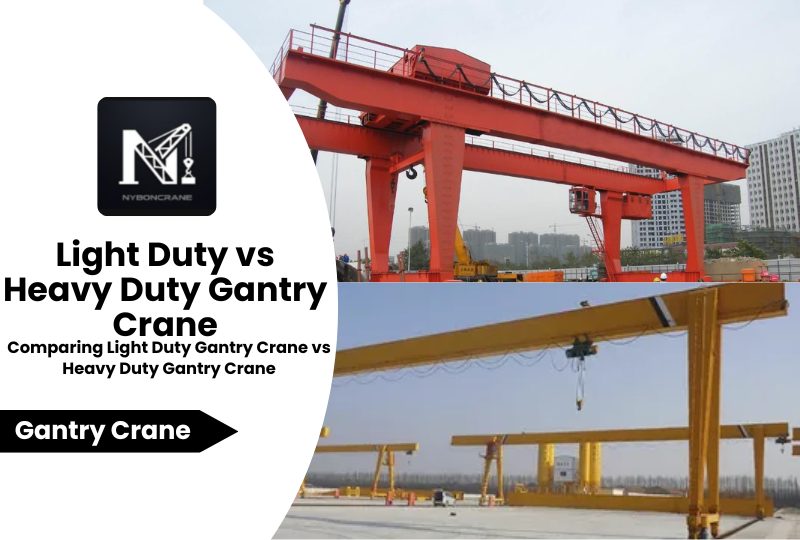
A light-duty gantry crane is built for occasional lifting of smaller loads, usually under 20 tons, in workshops or small yards. A heavy duty gantry crane is engineered for continuous, high-tonnage lifting in demanding environments like ports, shipyards, and steel plants. The right choice depends on how often you lift, how heavy your loads are, and how long you need the crane to last.
Choosing between the two is not just about price. It comes down to duty cycle, structural design, and the working environment the crane will operate in every day. Here is how they actually compare.
Heavy Duty Gantry Crane
A heavy duty gantry crane is built for continuous, high tonnage lifting in demanding environments. Capacities often range from 10 tons to 200 tons or more, with reinforced frames for extended use. They are the standard choice for ports, shipyards, steel mills, and container yards.
Light Duty Gantry Crane
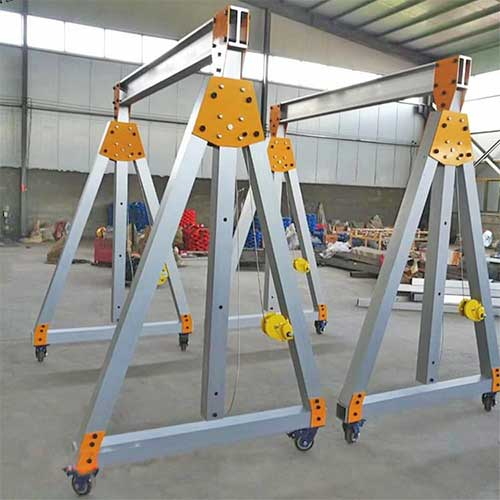
A light duty gantry crane is designed for occasional lifting of smaller loads, usually up to 20 tons. It works well in workshops, small yards, and indoor facilities with limited space. These cranes offer a simple structure and lower upfront cost for intermittent use.
Compare Heavy Duty vs Light Duty Gantry Crane
Load Capacity and Span
Light-duty gantry cranes generally handle loads from a few hundred kilograms up to about 20 tons. They work well for moving small machinery parts, assembling equipment, or handling materials in a warehouse.
Heavy-duty gantry cranes start where light-duty cranes stop. Capacities commonly range from 10 tons up to 200 tons or more, with some specialized cranes rated even higher. Spans are also longer, often stretching across container yards or shipbuilding berths where a single lift needs to cover a wide area.
Structural Design and Build Quality
Light-duty cranes use a simplified frame with fewer gantry crane components. This keeps the structure lightweight and easier to install, but it also limits how much stress the crane can absorb over time.
Heavy-duty cranes are built differently from the ground up. They use reinforced box girders, stronger wheel assemblies, and more robust drive systems to handle repeated heavy lifts without fatigue. The trade-off is a higher upfront cost, but the crane is designed to hold up under years of demanding use.
Where Each Type Gets Used
Light duty gantry cranes fit well in maintenance workshops, small fabrication shops, and indoor facilities where floor space is limited and lifting needs are modest.
Heavy duty gantry cranes are the standard in industries where downtime is expensive, and loads are large. Ports, container terminals, steel mills, shipyards and heavy equipment manufacturing all rely on heavy duty gantry systems to keep operations moving. This is the space where companies like Nybon Machinery focus, building single girder, double girder and container handling gantry cranes designed specifically for continuous industrial duty. Read more about Gantry Crane Types here.
Cost and Long Term Value
Light duty cranes cost less to buy and install, which makes sense for operations with lighter, occasional lifting needs. But if a light duty crane is pushed into heavy duty conditions, it wears out faster and needs more frequent repairs.
Heavy duty cranes cost more initially, but they are built for a longer service life under constant load. For high-volume operations, the total cost of ownership often works out lower over time because the crane needs less downtime and fewer replacements.
How to Choose the Right Gantry Crane?
Ask a few simple questions to your team before deciding.
How many lifts happen per day? A handful of lifts points toward light duty. Continuous or near continuous lifting points toward heavy duty.
How heavy are the loads? Anything consistently above 20 tons usually calls for a heavy-duty design.
What is the operating environment? Indoor workshops with controlled conditions suit light duty cranes. Outdoor industrial sites, ports and yards need the durability of heavy duty systems.
How long does the crane need to last under this workload? If the crane will run for years under heavy use, investing in a heavy duty build avoids costly downtime later.
Contact Nybon Machinery
Once you’ve decided which type of gantry crane to choose, now you’re looking for a reliable gantry crane manufacturer in China. Nybon Machinery designs and builds heavy-duty gantry cranes for ports, shipyards, steel plants and container yards worldwide.
Our range covers single girder gantry crane, double girder gantry cranes, rubber-tyred gantry cranes, RMG container gantry crane, straddle carrier gantry cranes, and beam-launching gantry cranes, engineered for demanding industrial duty cycles.
Get in touch with our team for a custom quote and expert guidance on the right crane for your project.