Steel Plants

Steel mills require robust and high-performance lifting equipment capable of handling heavy loads under intense working conditions. Our crane solutions are specifically designed to meet the rigorous demands of steel manufacturing processes.

Lifting Solutions for Steel Plant Material Handling

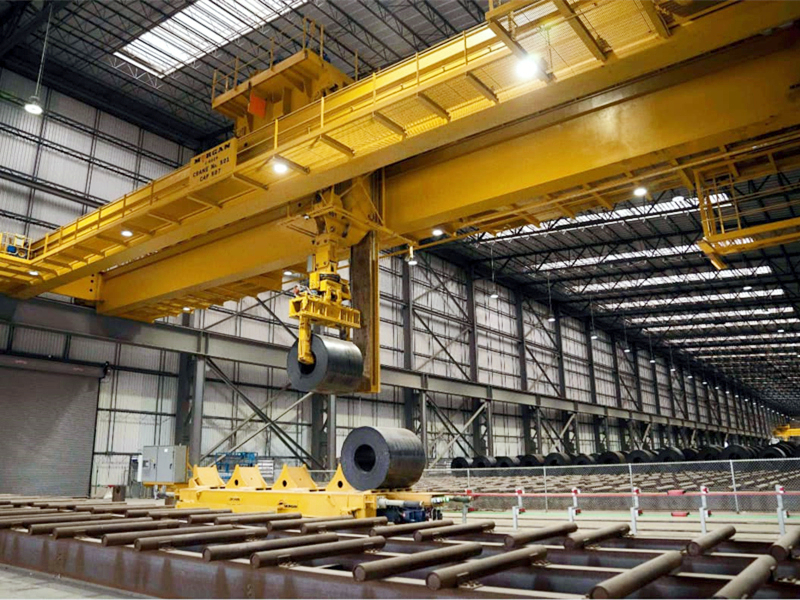
Steel plants move coils, slabs, and billets through production at high volume, often around the clock. The crane handling that material has to match the specific product being moved, since a coil, a slab, and a billet each need a different lifting approach and a different attachment on the hook.

Nybon Machinery‘s double girder overhead cranes serve as the base platform for steel plant material handling, configured with the attachment the application calls for. Coil handling typically uses a C-hook for horizontal coils, a vertical lifter for coils stored on end, or an electromagnet for fast cycle handling without a mechanical grip. Slab and billet handling typically uses a clamp or tong attachment sized to the plate or bar dimensions. Single girder overhead cranes cover lighter duty service center work where load and cycle frequency are lower than a primary mill.

An upper trolley rotating overhead crane is a double girder crane that can turn a load while it lifts. A rotating function on the trolley or hook lets the operator change the load direction in the air, without dragging it across the floor. It is used in steel plants, where ladles, coils and heavy stock must be placed with care.

This guide explains how the design works, where it fits, and what to check before you buy.

How a Rotating Trolley Crane Works

A standard overhead crane lifts straight up and moves along two axes. It cannot turn the load. A rotating design adds a turning function, so the load can spin around the vertical hoist line.

Common set ups use these elements.

  • A main trolley that carries the main hoist and the load
  • A rotating unit, built into the trolley or the hook, that turns the load around the hoist line
  • A second hoist or auxiliary hook, used to tilt or turn over loads that need more than a simple rotation
  • A control system that keeps rotation slow and smooth

Layouts differ between suppliers and projects. Confirm the exact configuration against the loads you plan to handle.

Why Steel Plants Use This Design

Steel plants move awkward and heavy loads. A ladle may need to tilt for pouring. A long billet bundle may need to turn to fit a rack. Turning loads by hand with ropes is slow and unsafe.

With a rotating crane the operator does the turn from the control position. That cuts the number of people near the load and shortens the cycle.

  • Ladle handling and tilting during pouring work
  • Turning slabs, billets and long stock to fit storage racks or process lines
  • Positioning equipment during mill maintenance and roll changes
  • Rotating loads in tight bays where space for a swing is limited
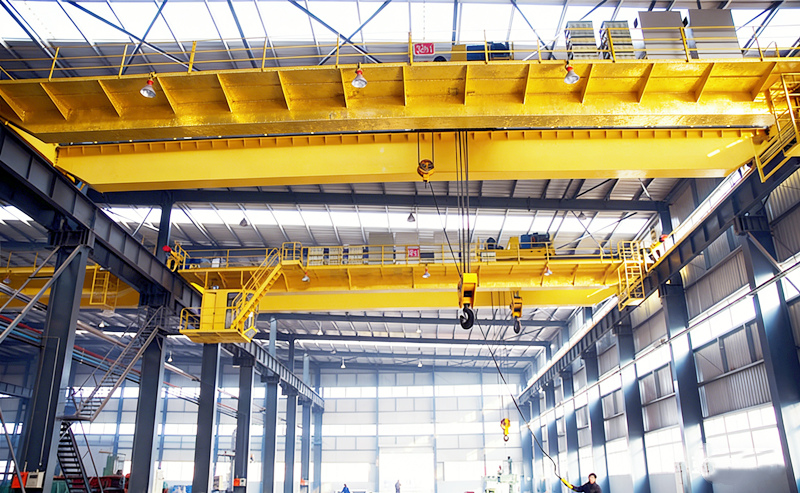
Upper trolley rotating overhead crane in a steel plant bay

Key Parts to Review

  • Rotating mechanism. Check the gear type, the brake and the rotation speed range. Slow, damped turning protects the load and the rigging.
  • Hoist and brakes. For hot metal lifting, two brakes on the hoist are a common safety rule.
  • Girder and trolley frame. Rotation adds torque to the structure, so the frame must be sized for it.
  • Heat protection. Shields and heat resistant cables protect the crane near molten metal.
  • Limit switches and overload limiter. They guard against travel and load errors.
  • Operator station. Choose a cabin with a clear view, or a remote control when the work allows it.

Duty Class and Standards

Steel plant cranes often run many cycles each shift. Under GB/T 3811, the A1 to A8 scale sets the duty class. Heavy continuous work usually sits in the upper part of that scale. GB 6067 adds the safety rules for the machine. Buyers who use FEM 1.001 can match the class to a FEM group.

Set the class from your real shift pattern, not from the load weight alone. A smaller crane that works nonstop needs a higher class than a larger crane that lifts once a day.

Related Cranes in the Same Plant

Steel plants run several overhead crane types side by side. A foundry overhead crane handles molten metal, while a grab overhead crane moves scrap and bulk material.

How to Choose an Upper Trolley Rotating Overhead Crane

Prepare this list for your supplier.

  • Load weight, shape and whether it needs tilting or turning
  • Rotation angle and speed you need
  • Span, hook height and bay layout
  • Ambient heat, dust and fumes
  • Shift pattern and cycles per hour
  • Maintenance access to the rotating unit

Nybon Machinery builds a double girder overhead crane platform for steel plants and can add rotation to match the load. Share your layout on the contact page for a proposal.

FAQs

What is an upper trolley rotating overhead crane?

It is a double girder overhead crane with a rotating function that turns the load around the hoist line while it is lifted.

Where is a rotating overhead crane used?

It is used mainly in steel plants for handling ladles, slabs, billets and heavy parts that need turning or tilting.

Does rotation change the crane duty class?

Not by itself. The class depends on how often and how heavily the crane works, but the rotating unit must match that class.

Is a rotating crane safer than a standard one?

It can be, because the operator turns the load from the control position and fewer workers stand near it.
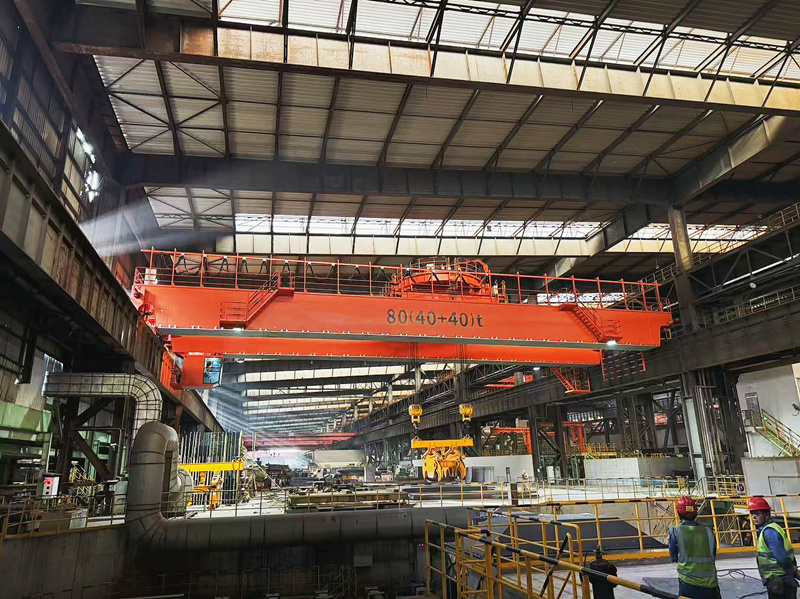
A foundry overhead crane lifts and moves ladles of molten metal inside a casting plant. It carries a much higher safety burden than a general workshop crane, because a dropped or tipped ladle can injure people and stop production. Foundries that pour at scale often choose a purpose-built casting crane for this job.

This guide covers the main features, the standards behind them, and a simple checklist for buyers.

What Makes a Foundry Crane Different

Three conditions set a foundry apart: heat, splash risk, and repeated heavy cycles. Radiant heat from the furnace and the ladle warms the girders and cables. Metal splash can hit ropes and hooks. And the same lift repeats many times each shift.

A foundry crane is designed around these conditions from the start. It is not a general crane with a few shields added.

Core Safety Features

  • Two hoisting brakes. For molten metal, two independent brakes on the hoist are a common safety rule, so the ladle stays held if one fails.
  • Heat shields. Plates under the girder and around the hook block shield the machine from radiant heat.
  • Heat resistant wire rope. A steel core rope handles heat better than a fibre core.
  • Heat resistant cables and electrics. Special insulation and screens protect the wiring.
  • Overload limiter and limit switches. They prevent over lifting and over travel with a full ladle.
  • Smooth speed control. A frequency converter gives gentle starts and stops, which limits ladle sway and slag spill.
Foundry overhead crane carrying a ladle of molten metal

Main Hook and Auxiliary Hook

Most foundry cranes carry two hooks. The main hook lifts the ladle through a ladle hanger or lifting beam. The auxiliary hook handles tilting for pouring, as well as lighter jobs such as mould parts and tools.

Duty Class and Standards

Busy melt shops lift often, and the loads are heavy. Under GB/T 3811 the duty class for ladle cranes commonly sits in the upper range of the A1 to A8 scale, such as A6 or above. Smaller foundries with fewer pours may fit a lower class. GB 6067 sets the safety rules, including those for hot metal. Buyers who use FEM 1.001 can match the class to a FEM group.

Choose the class from your pour schedule, not only from the ladle weight.

Daily Care in a High Heat Bay

  • Inspect ropes after each shift, since heat and splash wear them quickly
  • Keep slag and dust off rails, wheels and electrical boxes
  • Check brake pads, hook wear and other hoist components on a set schedule
  • Train operators in ladle handling and emergency stops

How to Choose a Foundry Overhead Crane

  • Ladle weight, including the molten metal and the hanger
  • Span, hook height and bay length
  • Pour cycles per hour and shifts per day
  • Distance between the furnace, the pouring station and the mould line
  • Heat level at girder height
  • Whether tilting for pouring is required

Nybon Machinery builds double girder overhead cranes for smelting and foundry workshops, with heat protection set for your bay. Share your ladle data on the contact page to start a review.

Plants that also handle scrap and bulk stock usually add a grab overhead crane in the neighboring bay.

FAQs

What is a foundry overhead crane?

It is an overhead crane built to carry ladles of molten metal in a casting plant, with heat protection and extra safety systems.

Why does a foundry crane need two hoist brakes?

Two brakes give a backup. If one fails, the second still holds the ladle, which prevents a spill.

What duty class does a foundry crane need?

It depends on pours per shift. Busy melt shops often need a high class such as A6 or above, while smaller shops can use a lower one.

How is a foundry crane different from a standard overhead crane?

It adds heat shields, heat resistant ropes and cables, dual brakes and finer speed control for molten metal handling.

A grab overhead crane is a bridge crane fitted with a grab bucket for loose bulk material. It picks up scrap metal, coal, ore and raw material without slings or manual loading. Steel plants, scrap yards and power plants use it to feed furnaces, fill hoppers and clear stockpiles. The bucket itself is covered on our grab bucket page.

This guide explains how the system works, which grab types exist, and how to choose one.

How a Grab Overhead Crane Works

The crane runs on rails above the material yard or bay. The trolley carries a hoist that opens and closes the grab. The operator lowers the open bucket onto the pile, closes it to scoop, lifts, travels to the target and opens it to drop the load.

This cycle repeats many times per hour, so the crane must be built for continuous use.

Types of Grab Buckets

  • Double rope grab: one holding rope and one closing rope, run by a two drum hoist. This is the common choice for bulk handling.
  • Four rope grab: two holding ropes and two closing ropes. It is more stable and suits large buckets and heavy loads.
  • Motor grab, also called electro hydraulic grab: the bucket has its own motor and hydraulic unit, fed by a cable. It needs a simpler hoist and gives good control, but adds cable handling.

Pick the type by material, bucket size and how often the crane works.

Grab overhead crane with a grab bucket handling bulk material

Matching the Bucket to the Material

Bucket volume and material density decide the lifting load. A bucket holding one cubic meter of coal weighs far less than one holding the same volume of scrap or ore. Always calculate the full load as bucket weight plus material weight.

  • Light bulk such as coal and ash: larger bucket volume
  • Heavy bulk such as ore and heavy scrap: smaller volume and a stronger bucket
  • Irregular scrap: a grab with teeth, or a design made for mixed shapes

Duty Class and Structure

Grab cranes are among the busiest cranes in a plant. They often run most of the shift. Under GB/T 3811 they commonly sit in the upper part of the A1 to A8 scale, and A6 to A8 is often discussed for continuous grab duty. A double girder overhead crane is the usual base, because it carries the heavy trolley and shock loads well. GB 6067 sets the safety rules, and FEM 1.001 helps buyers map the class.

Features That Help in Dusty Plants

  • Sealed motors and electrical boxes to keep dust out
  • A cabin with filtered air, or remote control from a clean room
  • Anti sway control, so the grab lands where it should
  • Overload limiter and limit switches
  • Wear checks on hoist parts and crane wheels built into daily rounds

How to Choose a Grab Overhead Crane

  • Material type, density and lump size
  • Grab volume and lifting rate per hour
  • Span, lift height and stockpile layout
  • Duty class based on real shift hours
  • Dust, heat and moisture exposure
  • Cabin or remote control, and operator view

Nybon Machinery supplies double girder overhead cranes for steel plants and bulk handling bays, with grab hoists sized to your material. Send your data on the contact page.

A scrap bay often sits beside a melt shop, where a foundry overhead crane handles the molten metal.

FAQs

What is a grab overhead crane?

It is an overhead bridge crane fitted with a grab bucket, used to pick up and move loose bulk material such as scrap, coal and ore.

Which grab type is best?

A double rope grab suits general work. A four rope grab fits large buckets and heavy loads. A motor grab gives fine control but needs a cable system.

What duty class does a grab crane need?

Grab cranes often work most of the shift, so many sit in a high class such as A6 to A8 under GB/T 3811. Check it against your real cycle count.

How do I size the grab bucket?

Start from the material density and the lift rate you need. Then add the bucket weight to the material weight to get the rated load.

Global Cases for the Precast Industry

Matching the crane to the material

Coil handling method depends on how the coil is stored. Horizontal coils generally move with a C-hook, which grips the coil bore without contacting the outer wrap and reduces damage risk. Vertically stored coils need a different lifting geometry. Magnetic lifting works well for high cycle handling where speed matters more than gentle contact. Slab and billet handling is more straightforward, generally using a clamp sized to the product, but the crane still needs the load capacity and duty rating to run that clamp through continuous cycles without excess wear.

Duty class and standards

Steel plant cranes are commonly specified A6 to A7 under GB/T 3811 and GB 6067 for continuous high cycle operation, with capacity typically running from 5 to 50 tons for standard mill and service center duty, scaling higher for slab and billet handling at large integrated mills. FEM 1.001 is referenced where buyers need a European equivalent.

Nybon Machinery builds its double girder overhead crane platform to this duty class band, so steel plants can specify the base crane against the correct load and cycle profile, then configure the attachment for coil, slab, or billet handling.

Electric Winch
Electric Winch
Industrial
Industrial
Bridge Crane
Bridge Crane
Crane Trolley
Crane Trolley
Equipment
Equipment
Machinery
Machinery
System
System
Product
Product
Heavy Duty Crane
Heavy Duty
Bridge Machine
Bridge Machine
Machinery Work
Machinery
RTG Crane
RTG Crane
Gantry Crane
Gantry Crane
Overhead Crane
Overhead Crane
Outdoor Crane
Outdoor Crane
Winch System
Winch System

NYBONCRANE - Serving You 24/7