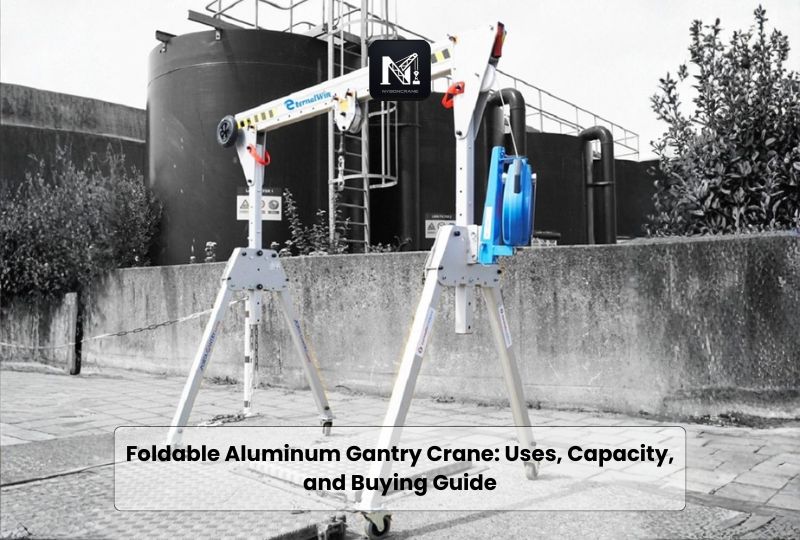
A foldable aluminum gantry crane is a portable lifting frame built from aluminum instead of steel. It uses hinges and joints at the leg and beam connections, which lets the whole structure fold down into a compact shape for storage or transport. When a lifting job comes up, the frame unfolds and locks into a stable A-frame or box structure within minutes, without welding, bolting a permanent base, or bringing in a crane truck.
This design has made foldable aluminum gantry cranes popular in workshops, maintenance teams, and any operation where lifting needs change location often. As a Custom Gantry Crane manufacturer in China, we have explained how they work, what they can handle, and where they fit best.
What Makes It “Foldable”?
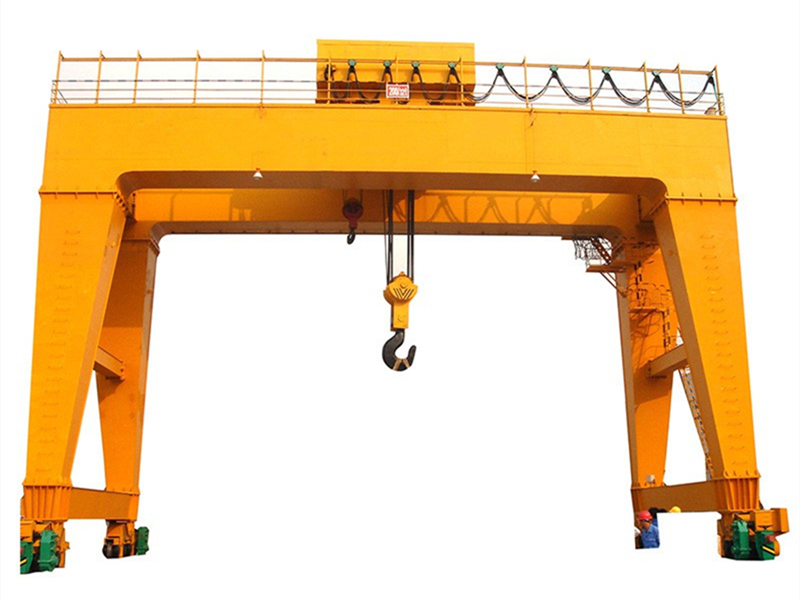
Traditional gantry cranes, whether single-girder or double girder gantry cranes, are built as fixed structures. Once assembled, they stay in one place. A foldable aluminum gantry crane is different because its legs and cross beam connect through hinge joints instead of rigid welds.
This means one or two people can collapse the frame flat, load it into a van or truck bed, and set it back up at a new site the same day. Most models also sit on locking casters, so once unfolded, the crane can be rolled into position and locked in place before lifting begins.
Why Choose Aluminum Instead of Steel
The material choice is what defines this crane category. Aluminum brings three practical advantages over steel for this type of equipment.
Lighter weight. For a similar load rating, steel can weigh two to three times more than aluminum. That weight difference is the reason a foldable aluminum gantry crane can be moved and assembled by hand, while a steel equivalent usually needs mechanical assistance.
Corrosion resistance. Aluminum does not rust the way steel does. This makes it a better fit for outdoor sites, coastal facilities, wastewater plants, or any environment with regular moisture exposure. Steel can be galvanized or painted to resist corrosion, but that coating wears down over time and needs upkeep.
Lower maintenance. With no rust to manage, upkeep is usually limited to routine inspection of hinges, casters, and hoist components. Most foldable models also use a modular build, so a damaged part can be swapped out without taking the whole unit out of service.
The tradeoff is load capacity. Aluminum gantry cranes typically top out well below what steel structures can carry, which is covered in the next section.
Load Capacity and Specifications of Foldable Aluminum Gantry Cranes
Foldable aluminum gantry cranes are built for light to medium lifting, not heavy industrial loads. Typical specifications across the market look like this:
- Load capacity: roughly 500 kg to 2,000 kg for most foldable models, with some heavy-duty aluminum gantries reaching up to 5 tons
- Beam span: usually between 8 and 20 feet, depending on the model
- Lift height: commonly adjustable between 5 and 12 feet
- Frame weight: starting as low as 100 to 150 lbs for entry-level units
By comparison, steel gantry cranes are commonly rated from half a ton up to 100 tons or more, with beam spans that can run past 100 feet on permanent structures. That gap is the main reason aluminum gantries are chosen for site flexibility rather than raw lifting power.
Industrial Uses of Foldable Aluminum Gantry Cranes
Because they can be set up almost anywhere without a fixed foundation, these cranes show up in a wide range of settings.
Workshops and auto repair. Engine pulls, transmission swaps, and general mechanical work in garages that don’t have a permanent overhead crane.
Confined space and manhole work. Utility crews use them to lower and raise pumps, covers, and cable equipment into underground vaults and shafts, where a permanent crane isn’t practical.
Rooftop and mechanical room access. Because one or two people can carry the folded frame up a stairwell or ladder, aluminum gantries are common for lifting HVAC parts and rooftop equipment.
Remote or temporary job sites. Construction crews and field service teams use them where a lift is only needed for a short period and hauling in heavier equipment isn’t cost-effective.
Marine and coastal facilities. The corrosion resistance makes them a practical choice near saltwater or in humid environments where steel would need constant rust protection.
Foldable Aluminum vs Steel Gantry Crane
| Factor | Foldable Aluminum | Steel |
|---|---|---|
| Load capacity | Light to medium, up to about 5 tons | Half a ton to over 100 tons |
| Weight | Low, movable by hand | High, needs mechanical handling |
| Setup | Folds and unfolds in minutes | Fixed or semi-permanent assembly |
| Corrosion resistance | Naturally resistant | Needs coating or galvanizing |
| Best for | Temporary, mobile, light-duty lifting | Permanent, high-capacity, heavy-duty lifting |
| Typical cost | Lower upfront cost for small capacities | Higher upfront cost, better value at scale |
Neither option is universally better. The right choice depends on how much weight needs to move, how often the crane relocates, and whether the installation is temporary or permanent.
Safety Considerations
Even though foldable aluminum gantry cranes are lighter and simpler to operate than fixed cranes, the same lifting safety principles still apply.
- Never exceed the rated load capacity listed on the crane’s nameplate
- Check that the ground surface is level and hard enough to support the crane and its load
- Most manufacturers specify that the crane should not be moved while carrying a load, unless the model is rated for load travel
- Inspect hinge joints, casters, and hoist attachments before each use, since these are the components most likely to wear from repeated folding
- Where applicable, look for equipment that meets OSHA and ANSI safety guidelines for material handling equipment
When a Permanent Steel Crane Makes More Sense
Foldable aluminum gantry cranes work well for mobile, light, and medium lifting jobs. But once load requirements move past a few tons, or a facility needs a crane that stays in one place and runs daily, a permanent steel structure is usually the more practical long-term investment. Manufacturers like Nybon Machinery build single-girder gantry cranes as well as double-girder gantry cranes for exactly that kind of heavier, fixed-installation lifting.
FAQs
How much weight can a foldable aluminum gantry crane lift?
Most models handle between 500 kg and 2 tons, though some heavy-duty aluminum designs are rated up to 5 tons.
Can a foldable aluminum gantry crane be used outdoors?
Yes. Aluminum’s natural corrosion resistance makes it well suited for outdoor and coastal environments, as long as the ground surface is stable and level.
Is a foldable aluminum gantry crane as strong as a steel one?
No. Aluminum offers a better strength-to-weight ratio for portability, but steel supports much higher load capacities and larger spans.
Can one person set up a foldable aluminum gantry crane?
Many entry-level models can be unfolded and positioned by one or two people, thanks to their low frame weight and locking casters.
Is it safe to move the crane while it’s carrying a load?
Most manufacturers advise against this unless the specific model is rated for load travel. Always check the equipment’s user manual first.