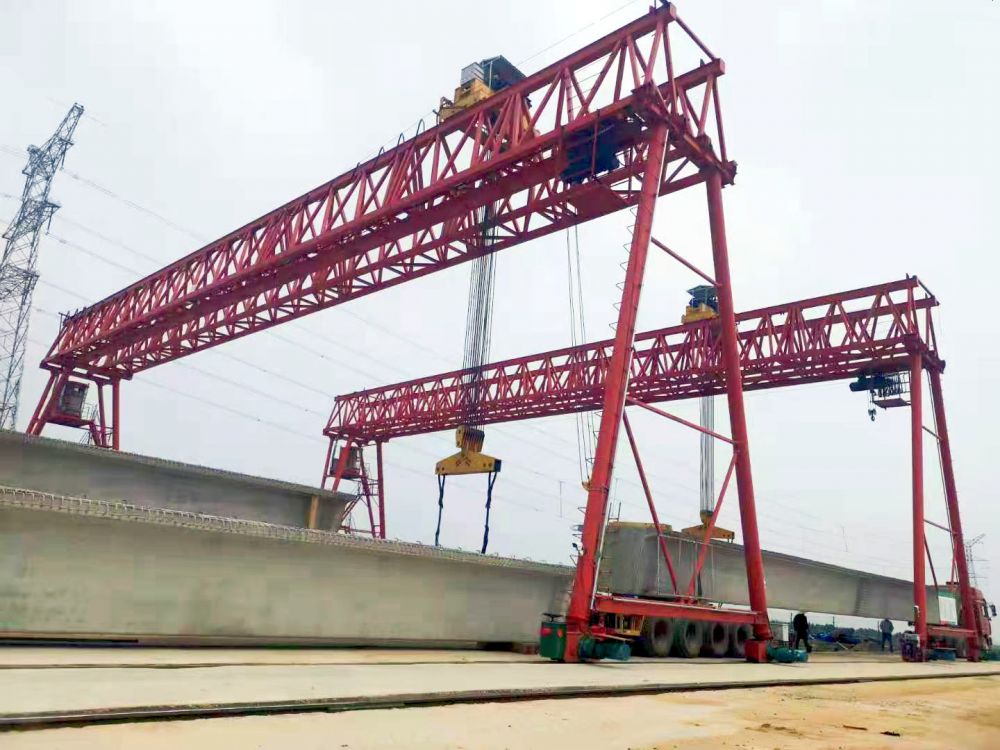
A truss gantry crane uses an open lattice frame instead of a solid box beam. The lattice is light, strong, and easy to ship in sections. Our truss gantry crane page covers the equipment. This guide explains how the design works, where it fits, and where it falls short.
How the Truss Design Works
The main girder is built from steel tubes or angle sections joined in a triangle pattern. The triangles spread the load along the beam. The result is a frame that carries a lot of weight for its own mass.
Less steel means a lighter crane. Open gaps let wind pass through, so wind pressure on the girder is lower than on a solid box.
- Girder: a lattice frame of top chords, bottom chords, and diagonals
- Legs: rigid or flexible legs, chosen by span and rail layout
- Trolley and hoist: an electric hoist on a trolley that travels along the girder
- Travel system: wheels on ground rails, driven by electric motors

Where a Truss Gantry Crane Works Best
- Precast concrete yards and construction sites
- Steel structure assembly and storage yards
- Material laydown areas that need wide spans
- Sites where the crane will move from one project to the next
The light frame is easy to take apart, transport, and set up again. That is a real saving on temporary or relocating sites.
Truss vs Box Girder
- Weight: a truss girder is lighter; a box girder is heavier
- Wind load: a truss presents less area to the wind
- Transport: a truss ships in sections; a box girder often ships in larger pieces
- Capacity: a truss suits light and medium loads, while a box girder is the usual choice for heavy and high-duty work
- Stiffness: a box girder is stiffer and deflects less under load
- Inspection: a truss has many welded joints that need regular checks
For heavy lifts, a double girder crane is usually the better pick. Compare the single girder gantry crane and double girder gantry crane pages to see where each fits.
Duty Class, Wind and Standards
Truss gantry cranes are often light to medium duty. Under GB/T 3811, the A1 to A8 scale sets the class, and many truss units for yards sit in the lower to middle range. GB 6067 sets the safety rules. Outdoor cranes also need a design for wind load, with rail clamps, anchors and storm tie-downs. Daily gantry crane safety checks should cover the rail clamps and anchors.
How to Choose a Truss Gantry Crane
- Rated load and the heaviest piece
- Span, lifting height and cantilever length
- Rail length and yard layout
- Wind speed at the site and storm plans
- Whether the crane will move between projects
- Control type, cabin or remote
Budget depends on span, load, wind rating, and duty class, so compare gantry crane cost ranges before you set a number.
Nybon Machinery builds gantry cranes for engineering and infrastructure sites and will review your span, load and wind conditions. Send them through the contact page.
Truss is one of several gantry crane types, and the wider gantry crane range covers heavier options.
FAQs
What is a truss gantry crane?
It is a gantry crane whose main girder is an open lattice frame instead of a solid box beam.
Is a truss gantry crane cheaper than a box girder crane?
Often yes, because it uses less steel and ships in sections. Final price depends on span, load and duty class.
Is a truss gantry crane good for heavy loads?
It suits light and medium loads well. For heavy or high-duty work, a box girder double girder crane is usually the better choice.
Can a truss gantry crane be relocated?
Yes. The frame can be taken apart in sections, moved, and set up again, which suits temporary sites.