
Choosing the right hoist can significantly impact productivity, workplace safety, maintenance costs, and long-term operational efficiency. Whether you operate a manufacturing plant, warehouse, logistics center, fabrication workshop, or construction facility, selecting the correct lifting solution is essential.
One of the most common questions facility managers ask is whether they should choose a wire rope hoist or a chain hoist.
The debate around wire rope hoist vs chain hoist has existed for decades because both systems offer unique advantages depending on the application. While they perform the same basic lifting function, their designs, lifting capacities, operating speeds, and maintenance requirements differ considerably.
At nybonmachinery, we help businesses across multiple industries select the most suitable hoist solutions for their operations. In this guide, we will compare both technologies in detail so you can make an informed decision.
Wire Rope Hoist vs Chain Hoist: Understanding the Basics
The first question most buyers ask is how the two systems differ.
When comparing wire rope hoist vs chain hoist, the most significant difference lies in the lifting medium.
A wire rope hoist uses steel wire rope wound around a drum.
A chain hoist uses a load chain that moves through a lifting mechanism.
Although both systems belong to modern hoist lifting systems, their performance characteristics are different.
Understanding these differences helps businesses select the right equipment based on lifting requirements, operational frequency, load capacity, and installation conditions.
Many procurement teams researching wire rope hoist vs chain hoist are looking for a balance between cost, reliability, and productivity.
What Is a Wire Rope Hoist?
Before comparing the systems, it is important to understand what a wire rope hoist is.
A wire rope hoist is a lifting device that uses steel wire rope wrapped around a drum to raise and lower loads.
These hoists are commonly installed on:
- Overhead cranes
- Gantry cranes
- Monorail systems
- Specialized lifting structures
A modern electric wire rope hoist provides smooth lifting performance, high lifting speeds, and excellent load control.
Wire rope hoists are often selected for heavy-duty industrial applications because they can handle large capacities and demanding duty cycles.
How Wire Rope Hoists Work
Understanding how wire rope hoists work helps explain their popularity in industrial facilities.
The hoist contains:
- Electric motor
- Gearbox
- Drum
- Wire rope
- Hook assembly
- Control system
When activated, the motor rotates the drum.
The wire rope winds or unwinds around the drum.
This movement raises or lowers the load.
Because the wire rope wraps evenly around the drum, operators benefit from smooth lifting performance and precise load positioning.
What Is a Chain Hoist?
To fully evaluate chain hoist vs wire rope hoist, we must also understand what a chain hoist is.
A chain hoist uses a chain instead of wire rope as the lifting medium.
Chain hoists can be:
- Manual
- Pneumatic
- Electric
Modern electric chain hoist systems are widely used in workshops, warehouses, maintenance departments, and light manufacturing operations.
Their compact design makes them suitable for facilities where space is limited.
How Chain Hoists Work
Understanding how chain hoists work is relatively straightforward.
The system contains:
- Load chain
- Drive mechanism
- Hook assembly
- Gear system
- Electric motor (for powered models)
As the motor rotates, the chain moves through the lifting mechanism.
The hook attached to the chain raises or lowers the load.
Chain hoists are known for simplicity, durability, and ease of maintenance.
Difference Between Wire Rope Hoist and Chain Hoist
The biggest difference between wire rope hoist and chain hoist involves performance characteristics.
Lifting Medium
Wire rope hoists use steel wire rope.
Chain hoists use load chains.
Capacity
Wire rope systems generally support higher lifting capacities.
Speed
Wire rope hoists often provide faster lifting speeds.
Precision
Wire rope systems offer smoother load movement.
Cost
Chain hoists are often less expensive for lower-capacity applications.
Size
Chain hoists are usually more compact.
These differences directly influence purchasing decisions.
Wire Rope Hoist Comparison
A proper wire rope hoist comparison reveals why these systems dominate heavy industrial environments.
Advantages
- High lifting capacities
- Faster lifting speeds
- Smooth operation
- Suitable for continuous duty
- Better for large spans
- Ideal for crane systems
Limitations
- Higher acquisition cost
- More complex maintenance
- Larger installation footprint
For facilities handling heavy materials every day, wire rope hoists often provide the best long-term value.
Chain Hoist Comparison
A detailed chain hoist comparison shows why many facilities continue to rely on chain-based lifting systems.
Advantages
- Compact design
- Lower purchase cost
- Easier maintenance
- Excellent for shorter lifts
- Reliable operation
Limitations
- Lower lifting speeds
- Reduced capacity ranges
- Less suitable for continuous heavy-duty operations
Chain hoists remain popular in maintenance departments, workshops, and small manufacturing facilities.
Wire Rope Hoist vs Chain Hoist Which Is Better?
The answer to wire rope hoist vs chain hoist which is better depends entirely on your application.
For heavy-duty industrial lifting:
Wire rope hoists often provide superior performance.
For lighter-duty applications:
Chain hoists may offer better value.
There is no universal winner.
The best solution depends on capacity requirements, operating frequency, workspace limitations, and budget considerations.
Hoist Lifting Capacity Comparison
One of the most important purchasing factors is hoist lifting capacity.
Typical Chain Hoist Capacities
- 0.5 ton
- 1 ton
- 2 ton
- 3 ton
- 5 ton
- 10 ton
Typical Wire Rope Hoist Capacities
- 1 ton
- 5 ton
- 10 ton
- 20 ton
- 50 ton
- 100 ton and above
Large manufacturing facilities often require higher capacities, making wire rope systems the preferred option.
Wire Rope Hoist vs Chain Hoist for Overhead Cranes
Many buyers ask about wire rope hoist vs chain hoist for overhead cranes.
In most industrial crane applications, wire rope hoists are preferred because they offer:
- Higher capacities
- Better speed performance
- Greater durability
- Improved duty ratings
This is why many overhead crane hoist systems use wire rope technology.
However, smaller crane installations may still benefit from chain hoists depending on operational requirements.
Wire Rope Hoist vs Chain Hoist for Warehouses
The comparison of wire rope hoist vs chain hoist for warehouses depends on the type of inventory being handled.
Warehouses handling:
- Heavy machinery
- Steel products
- Large equipment
Often prefer wire rope systems.
Warehouses handling:
- Smaller inventory
- Maintenance equipment
- Moderate loads
May benefit from chain hoists.
Choosing the right solution requires evaluating actual operational needs.
When to Use a Wire Rope Hoist
A common question from buyers is when to use a wire rope hoist.
Wire rope hoists are ideal when applications require:
- High lifting capacities
- Frequent operation
- Fast lifting speeds
- Long lifting heights
- Heavy-duty industrial performance
- Continuous production support
These hoists are commonly found in:
- Manufacturing plants
- Steel mills
- Shipyards
- Automotive factories
- Large warehouses
- Heavy industrial facilities
For organizations handling substantial loads every day, wire rope technology often delivers superior productivity and operational efficiency.
Many large-scale crane and hoist systems rely on wire rope hoists because they perform well under demanding conditions.
When to Use a Chain Hoist
Businesses often ask when to use a chain hoist instead.
Chain hoists are excellent for applications requiring:
- Lower lifting capacities
- Compact installations
- Occasional lifting
- Lower acquisition costs
- Simpler maintenance
They are frequently used in:
- Workshops
- Maintenance departments
- Equipment repair facilities
- Small manufacturing operations
- Light-duty warehouse applications
For many organizations, chain hoists provide an affordable and dependable lifting solution without the complexity of larger systems.
Wire Rope Hoist vs Chain Hoist Cost Comparison
One of the most important buying considerations is wire rope hoist vs chain hoist cost comparison.
The initial investment can vary significantly depending on:
- Capacity
- Lift height
- Duty cycle
- Automation features
- Installation requirements
While chain hoists generally cost less upfront, the total ownership cost may differ depending on operational demands.
Facilities should evaluate long-term productivity rather than focusing solely on purchase price.
Wire Rope Hoist Price Factors
Several factors influence wire rope hoist price.
Capacity
Higher capacities require stronger structural components and more powerful motors.
Lift Height
Longer lifting distances increase equipment requirements.
Duty Classification
Heavy-duty industrial hoists typically cost more.
Automation Features
Remote controls and advanced monitoring systems can increase pricing.
Installation Requirements
Complex installations may add project costs.
Organizations should compare total value rather than focusing exclusively on the lowest bid.
Chain Hoist Price Factors
Several variables affect chain hoist price.
These include:
- Lifting capacity
- Chain length
- Motor size
- Operating speed
- Duty cycle
- Control options
Because chain hoists are generally simpler, they often provide a more economical solution for lighter-duty applications.
However, lower purchase cost does not always mean lower long-term operating costs.
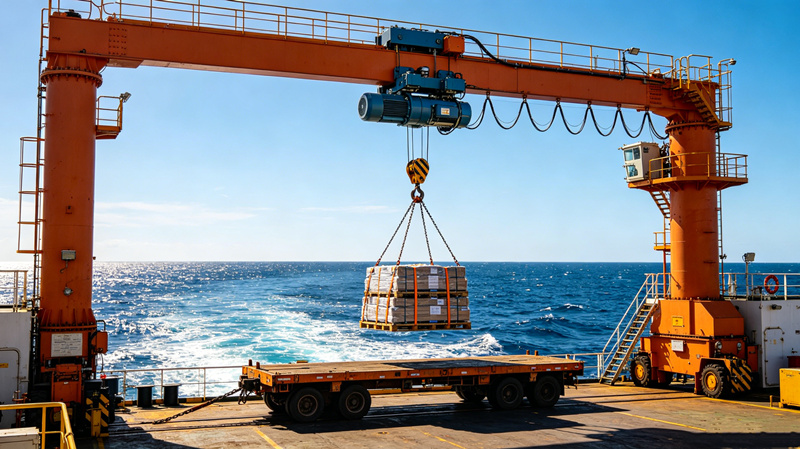
Wire Rope Hoist Cost vs Long-Term Value
Understanding wire rope hoist cost requires considering lifecycle value.
Wire rope hoists often offer:
- Longer service life
- Higher productivity
- Better performance
- Faster operation
Facilities operating around the clock frequently justify the higher investment through increased efficiency.
This is especially true in large manufacturing environments where production downtime can be extremely expensive.
Chain Hoist Cost and Ownership Considerations
Evaluating chain hoist cost should include both purchase and maintenance expenses.
Benefits may include:
- Lower initial investment
- Simpler servicing
- Easier replacement
- Lower installation requirements
These advantages make chain hoists attractive for smaller operations and maintenance departments.
Electric Wire Rope Hoist vs Electric Chain Hoist
Modern facilities often compare electric wire rope hoist and electric chain hoist systems.
Electric Wire Rope Hoist Advantages
- Faster lifting
- Higher capacities
- Smoother operation
- Better performance for continuous use
- Superior heavy-duty capability
Electric Chain Hoist Advantages
- Compact size
- Lower cost
- Easier installation
- Reduced maintenance complexity
The ideal choice depends on operational goals and lifting requirements.
Wire Rope Hoist vs Chain Hoist for Industrial Facilities
Industrial environments place unique demands on lifting equipment.
When evaluating wire rope hoist vs chain hoist, facility managers should consider:
Production Volume
High-volume operations often favor wire rope systems.
Load Size
Larger loads generally require wire rope hoists.
Duty Cycle
Continuous operation typically favors wire rope technology.
Space Limitations
Compact installations may benefit from chain hoists.
These considerations help organizations select the most appropriate solution.
Material Handling Equipment Considerations
Modern material handling equipment must support efficient workflow while maintaining safety standards.
Both chain and wire rope hoists contribute to effective material handling strategies.
The right choice depends on:
- Facility layout
- Load characteristics
- Operational frequency
- Safety requirements
- Future growth plans
Organizations that carefully evaluate these factors generally achieve better long-term results.
Heavy Duty Lifting Equipment Requirements
Facilities requiring heavy duty lifting equipment often lean toward wire rope technology.
Examples include:
- Steel production
- Shipbuilding
- Mining operations
- Heavy machinery manufacturing
- Energy sector projects
These environments demand reliable lifting performance and high-duty-cycle capability.
Wire rope hoists are often designed specifically for these demanding conditions.
Hoist Manufacturers and Equipment Quality
Not all hoists are created equal.
Reputable hoist manufacturers invest heavily in:
- Engineering
- Quality control
- Safety systems
- Testing procedures
- Product development
Choosing quality equipment reduces downtime and improves long-term reliability.
When comparing suppliers, businesses should evaluate more than price alone.
Industrial Hoist Suppliers: What to Look For
Reliable industrial hoist suppliers provide more than equipment.
The best suppliers offer:
- Engineering support
- Installation assistance
- Operator training
- Maintenance guidance
- Spare parts support
- Technical expertise
At nybonmachinery, we help customers identify the right hoist solutions based on actual operational requirements rather than generic recommendations.
Lifting Equipment Comparison: Key Factors
A proper lifting equipment comparison should evaluate:
Capacity
Can the equipment handle maximum loads safely?
Speed
Does the lifting speed support productivity goals?
Maintenance
What servicing requirements should be expected?
Reliability
Will the equipment support continuous operation?
Cost
Does the investment provide long-term value?
Safety
Are modern safety features included?
These criteria form the foundation of any professional purchasing decision.
Hoist Selection Guide for Buyers
An effective hoist selection guide starts with understanding operational requirements.
Before purchasing, answer the following questions:
- What is the maximum load weight?
- How often will the hoist operate?
- What lifting height is required?
- Is continuous operation expected?
- What is the available budget?
- Will future expansion occur?
The answers help determine whether a chain hoist or wire rope hoist is the better solution.
Common Mistakes When Choosing a Hoist
Many buyers make avoidable mistakes during the purchasing process.
Common errors include:
- Selecting insufficient capacity
- Ignoring future growth
- Focusing only on price
- Underestimating maintenance needs
- Choosing inappropriate duty ratings
- Overlooking safety requirements
Avoiding these mistakes improves project success and reduces ownership costs.
Wire Rope Hoist Comparison: Performance Perspective
A deeper wire rope hoist comparison reveals why these systems dominate many large industrial facilities.
Wire rope hoists are designed to provide:
- Higher lifting speeds
- Better lifting height capabilities
- Smooth load positioning
- Superior heavy-duty performance
- Longer travel distances
These characteristics make them particularly effective in large manufacturing plants and crane installations where productivity is critical.
For organizations operating multiple shifts, wire rope technology often delivers measurable improvements in throughput and efficiency.
Chain Hoist Comparison: Operational Perspective
A detailed chain hoist comparison highlights the strengths that continue to make chain hoists popular.
Many facilities appreciate chain hoists because they offer:
- Simplicity
- Reliability
- Compact installation
- Lower upfront investment
- Easy maintenance
For maintenance teams, repair workshops, and smaller manufacturing operations, chain hoists often provide everything needed without unnecessary complexity.
This balance between performance and affordability explains why chain hoists remain a valuable option across many industries.
Wire Rope Hoist vs Chain Hoist Which Is Better for Manufacturing?
Manufacturing facilities frequently ask wire rope hoist vs chain hoist which is better for production operations.
In many cases, the answer depends on production volume.
High-volume facilities often benefit from:
- Faster lifting cycles
- Continuous operation capability
- Greater lifting capacities
These advantages usually favor wire rope hoists.
Smaller production environments may prioritize:
- Simplicity
- Cost control
- Compact equipment
In these situations, chain hoists may be the more practical choice.
The correct answer depends on operational requirements rather than a universal preference.
Wire Rope Hoist vs Chain Hoist for Overhead Crane Systems
Many buyers evaluating wire rope hoist vs chain hoist for overhead cranes are designing new crane installations.
Most heavy-duty overhead cranes utilize wire rope hoists because they support:
- Larger capacities
- Longer spans
- Higher duty cycles
- Faster lifting speeds
However, smaller crane systems often use chain hoists successfully.
Selecting the correct hoist should always align with the overall crane design and intended application.
Wire Rope Hoist vs Chain Hoist for Warehouses
The discussion around wire rope hoist vs chain hoist for warehouses often depends on inventory characteristics.
Warehouses handling:
- Steel products
- Machinery
- Large equipment
- Industrial components
Frequently prefer wire rope systems.
Warehouses handling:
- Smaller products
- Maintenance materials
- Moderate loads
May find chain hoists more economical.
The goal is to match the lifting solution to actual operational requirements.
Safety Considerations for Both Hoist Types
Safety remains one of the most important factors in any lifting operation.
Regardless of whether a facility chooses a wire rope or chain hoist, best practices include:
Routine Inspections
Operators should inspect equipment regularly.
Load Verification
Loads should never exceed rated capacity.
Operator Training
Personnel should receive proper training before operating equipment.
Scheduled Maintenance
Preventive maintenance reduces failure risks.
Safe Operating Procedures
Facilities should establish clear operating guidelines.
These practices help protect workers while extending equipment lifespan.
Maintenance Requirements
Maintenance requirements differ slightly between the two technologies.
Wire Rope Hoist Maintenance
Maintenance activities often include:
- Rope inspections
- Drum inspections
- Lubrication
- Motor checks
- Brake testing
Chain Hoist Maintenance
Maintenance generally involves:
- Chain inspection
- Lubrication
- Hook examination
- Gear inspection
- Load testing
Both systems require routine maintenance to maintain safe operation.
Future Trends in Hoist Technology
The lifting industry continues to evolve.
Modern hoist systems increasingly include:
- Smart monitoring
- Predictive maintenance
- Wireless controls
- Energy-efficient motors
- Automation integration
These technologies help facilities improve productivity while reducing downtime.
As industrial operations become more advanced, both chain and wire rope hoists continue to benefit from innovation.
How to Make the Final Decision
If you are still comparing wire rope hoist vs chain hoist, focus on the following factors:
Choose a Wire Rope Hoist If:
- High capacities are required
- Continuous operation is expected
- Fast lifting speeds are important
- Heavy-duty industrial applications are involved
- Large overhead cranes are being installed
Choose a Chain Hoist If:
- Capacity requirements are moderate
- Budget is a primary concern
- Installation space is limited
- Maintenance simplicity is preferred
- Operations are less demanding
This approach helps ensure the selected equipment aligns with business objectives.
Why Businesses Choose Nybon Machinery
At nybonmachinery, we understand that every facility has unique lifting requirements.
Our engineering team works closely with customers to evaluate:
- Capacity needs
- Facility layouts
- Operational goals
- Safety requirements
- Future expansion plans
Whether you require an advanced wire rope hoist or a reliable chain hoist, our goal is to provide practical solutions that improve productivity and operational efficiency.
We support customers across manufacturing, logistics, warehousing, steel production, and heavy industry with dependable lifting solutions designed for long-term performance.
Final Thoughts
Choosing between wire rope hoist vs chain hoist requires a clear understanding of operational needs, lifting requirements, budget constraints, and long-term business goals.
Throughout this guide, we explored the major differences, strengths, limitations, costs, maintenance requirements, and applications of both technologies. While chain hoists offer simplicity, affordability, and compact installation, wire rope hoists provide higher capacities, faster lifting speeds, and superior performance for demanding industrial environments.
For many businesses researching wire rope hoist vs chain hoist, there is no universal winner. The best solution depends on how the equipment will be used.
Companies operating heavy-duty manufacturing facilities, large crane systems, and continuous production environments often choose wire rope technology. Organizations focused on lighter-duty applications frequently benefit from the simplicity and affordability of chain hoists.
At nybonmachinery, we help customers evaluate their operational requirements and select lifting solutions that deliver long-term value. Whether you need industrial hoist equipment, advanced hoist lifting systems, or complete crane and hoist systems, choosing the right hoist today can improve productivity, enhance safety, and support business growth for years to come.
By carefully evaluating capacity requirements, operating conditions, maintenance expectations, and future expansion plans, organizations can confidently invest in the lifting solution that best fits their facility.
Frequently Asked Questions
What is the main difference between a wire rope hoist and a chain hoist?
The primary difference between wire rope hoist and chain hoist is the lifting medium. Wire rope hoists use steel wire rope wound around a drum, while chain hoists use a load chain moving through a lifting mechanism.
Which is better: wire rope hoist vs chain hoist?
The answer depends on the application. For heavy-duty industrial operations, wire rope hoists are often preferred. For lighter-duty applications, chain hoists may offer better value.
Are wire rope hoists more expensive than chain hoists?
Generally, yes. Wire rope hoist cost is often higher due to greater capacity, higher speeds, and more advanced engineering.
Which hoist is best for overhead cranes?
In many industrial applications, wire rope hoists are commonly selected for overhead crane hoist systems because of their performance and capacity advantages.
Can chain hoists be used in industrial facilities?
Yes. Chain hoists are widely used in maintenance departments, workshops, warehouses, and manufacturing facilities where moderate lifting capacities are sufficient.

