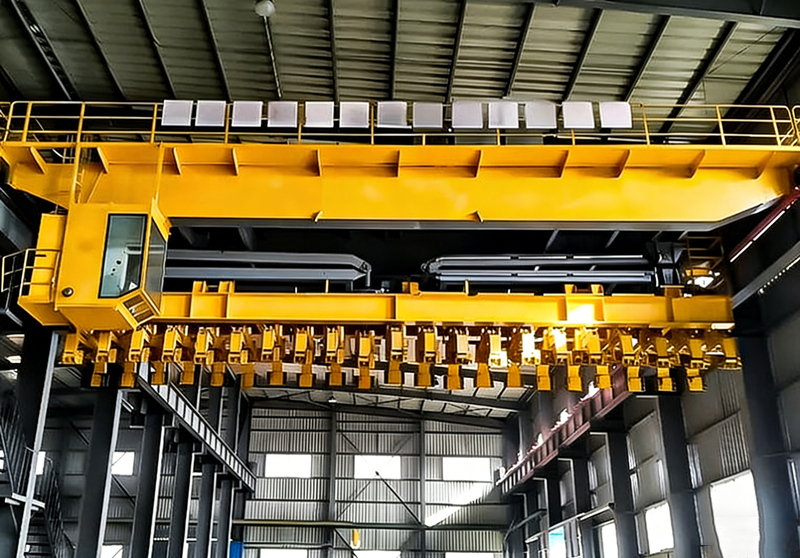
A multifunctional nonferrous metal crane is an overhead crane that does several jobs in one machine. In an aluminum smelter, it can change anodes, break crust, tap metal and lift cell parts. This saves floor space and cuts the number of separate machines in a smelting industry bay.
This guide explains the main functions, the parts that make them possible, and what to check before you choose one.
What the Crane Does in an Aluminum Smelter
Aluminum is made by electrolysis in long rows of cells. Each cell needs regular service. A multifunctional crane carries out most of that service from above.
- Anode changing: removes used carbon anodes and sets new ones in place
- Crust breaking: opens the hard crust on top of the bath so alumina can feed in
- Metal tapping: handles the tapping ladle that draws liquid aluminum from the cell
- Cell cover and part handling: lifts covers, busbar parts and other cell equipment
- Material transfer: moves anodes, ladles and spares along the cell line
Copper and other nonferrous smelters also use cranes with several tools, although the tasks differ.
Key Components
- Main hoist and auxiliary hoists for different tools and loads
- A trolley that carries the working attachments, such as a crust breaker and an anode handling tool
- Tool interfaces that allow a quick change between jobs
- Insulation at the hook and key contact points, as on any insulated overhead crane, because current flows through the potline
- Precise speed control for placing anodes and aligning tools
- Dust sealed and heat protected electrics for the cell room
Benefits and Limits
One crane can replace several single task machines. That reduces floor use and the number of units to maintain. Operators also learn one control system.
There are limits. One crane cannot do two jobs at once. If the cell room needs high output, a plant may use several cranes. Tool changes also take time, so plan the task order to cut waiting.
Duty Class and Standards
Smelter cranes work through most of each shift. A higher duty class under GB/T 3811, such as A6 or A7, is worth discussing with your supplier. GB 6067 sets the safety rules for the machine. If your team uses FEM 1.001, map the class to a FEM group.
How to Choose One
- List every task the crane must perform, with the weight of each tool and load
- Share the cell room layout, span, rail height and potline length
- State the current level and the insulation layers you need
- Define how many cells each crane must serve per shift
- Note heat, dust and fluoride exposure
- Plan spare parts for tools that wear fast
Nybon Machinery builds double girder overhead cranes for smelting plants and can match the tool package to your process. Send your layout through the contact page for a proposal.
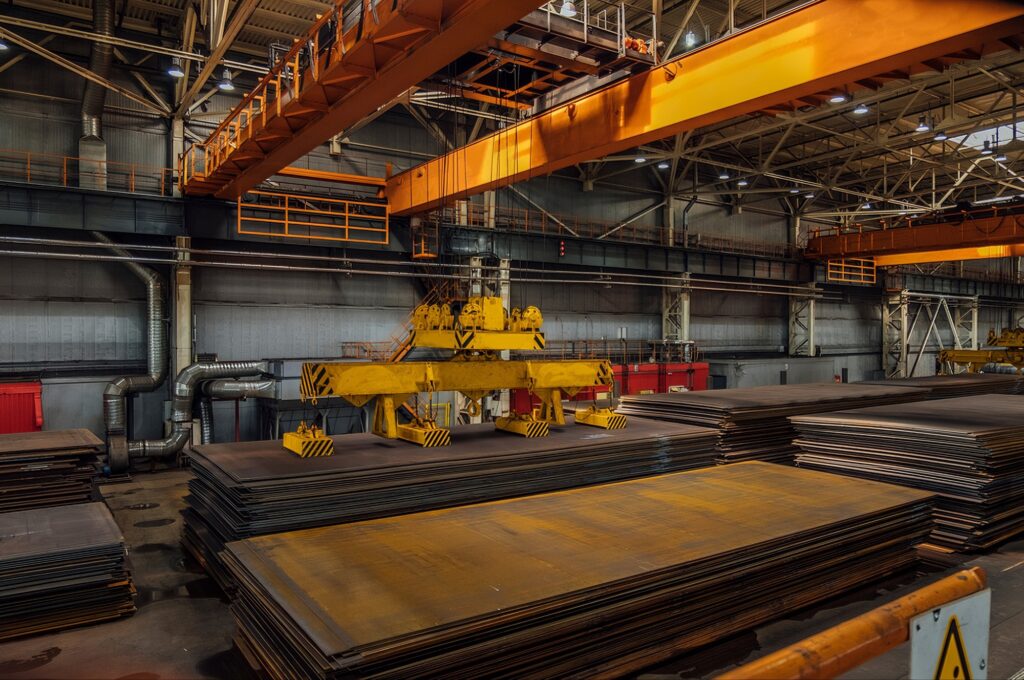
Plants that also move molten metal in ladles often add a foundry overhead crane to the same bay.
FAQs
What is a multifunctional nonferrous metal crane?
It is an overhead crane fitted with several tools, so it can change anodes, break crust, tap metal and lift parts in a smelter.
Which metals does it serve?
It is mostly used for aluminum smelting. Copper and other nonferrous smelters use similar cranes with tools suited to their process.
Does it need insulation?
In aluminum cell rooms, yes. Strong current runs through the potline, so insulation at the hook and other points protects people and equipment.
Can one multifunctional crane replace several machines?
It can replace many single task machines, but it still works one task at a time, so output depends on how you plan the work.