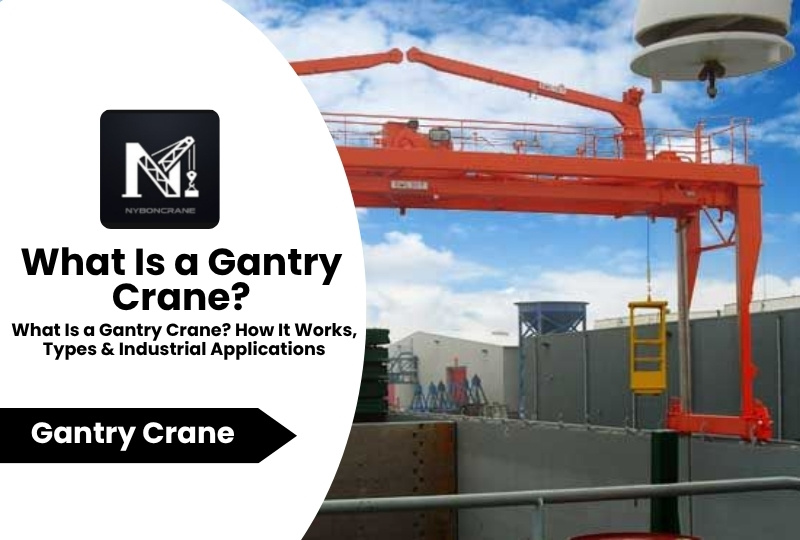
A gantry crane is a type of lifting equipment built around a horizontal beam that rests on two or more freestanding legs. Instead of hanging from a building’s ceiling or wall like an overhead crane, a gantry crane stands on its own. Its legs run on wheels, rails, or a fixed track, which lets the whole structure move along the ground while carrying heavy loads above it.
This design gives gantry cranes a “door” or portal shape, which is why they are sometimes called portal cranes. Because they do not depend on a building for support, gantry cranes work well in outdoor spaces such as ports, shipyards, construction sites, and open storage yards where there is no overhead runway to mount a crane on.
Defining Gantry Crane
In simple terms, a gantry crane is industrial lifting equipment made up of a main girder, two or more support legs, a trolley, a hoisting mechanism, and an electrical control system. The girder sits on top of the legs and spans the work area. A trolley runs along the girder and carries the hoist, which does the actual lifting and lowering.
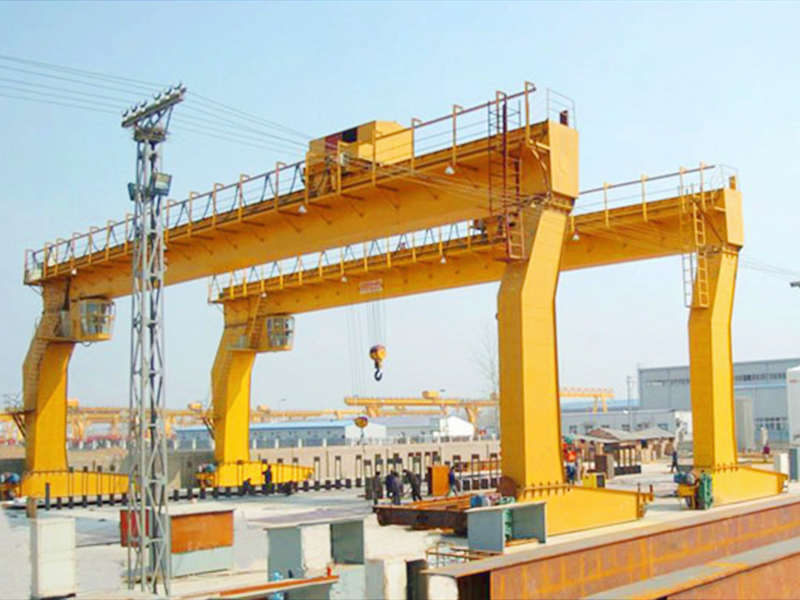
Three basic movements make a gantry crane work. The hoist raises and lowers the load. The trolley moves the load sideways along the girder. The whole crane travels forward and backward on its rails or wheels. Together, these three movements let the crane reach almost any point within its working area.
Gantry Crane vs Overhead Crane
People often use the terms gantry crane and overhead crane interchangeably, but they are not the same thing. An overhead crane, also called a bridge crane, is mounted on runway beams that are fixed to a building’s walls or roof columns. It needs a structure strong enough to carry the crane’s weight and the load it lifts.
A gantry crane does not need that kind of building support. It stands on its own legs and can be placed in any yard or open area with a suitable surface or rail track. This makes gantry cranes a practical choice when reinforcing a building is too costly, or when there is no building at all, such as at a shipyard or a container terminal.
What are the Main Components of a Gantry Crane
Every gantry crane, regardless of size, shares the same core parts. here are the main gantry crane components:
Main girder (main beam): This is the horizontal beam that carries the trolley and hoist. It can be built as a single girder or a double girder, depending on the load capacity needed.
Legs (support legs or outriggers): These vertical supports connect the girder to the ground. They can be straight, A-frame, or truss style, and they keep the crane stable while it carries a load.
End trucks (end carriages): These connect the ends of the girder to the legs. They house the travel wheels and help transfer the load evenly to the ground or rails.
Trolley: The trolley moves side to side along the girder and carries the hoist with it, allowing the load to shift horizontally.
Hoist: The hoist is the lifting component. It can be a wire rope hoist or a chain hoist, and it raises and lowers the load using a hook or other attachment.
Control system: This includes the control cabinet and operator device. Gantry cranes can be operated using a pendant control, a wireless remote, or an operator cabin, depending on the size of the crane and how far the operator needs to move.
Safety devices: Limit switches, overload protection, and emergency stop buttons are standard on most gantry cranes. Outdoor units often add wind brakes and rail clamps to handle weather conditions.
What are the Types of Gantry Cranes
Gantry cranes come in several configurations, and the right one depends on load capacity, span, and how the crane will be used. Here are the types of gantry cranes:
Single girder gantry crane: This type uses one main beam and is suited for light to medium duty lifting. Single girder gantry crane costs less and is easier to install, making it common in workshops and smaller facilities.
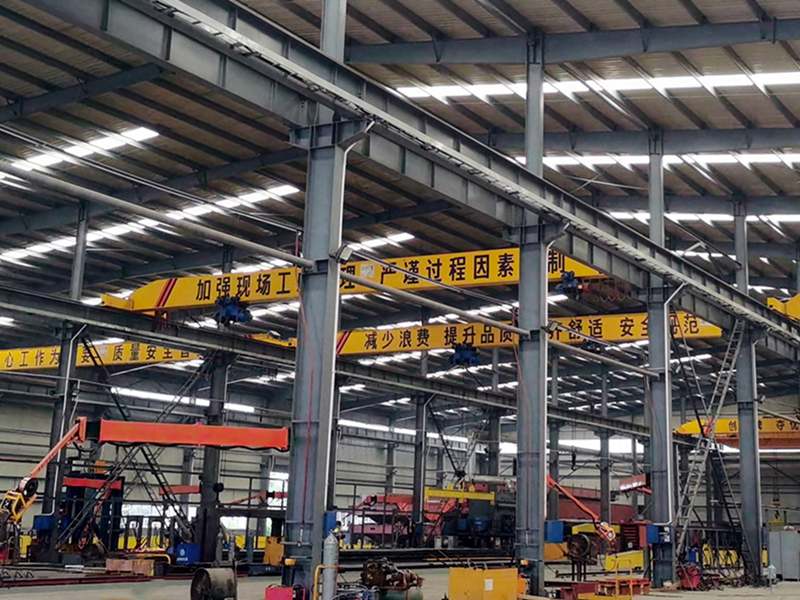
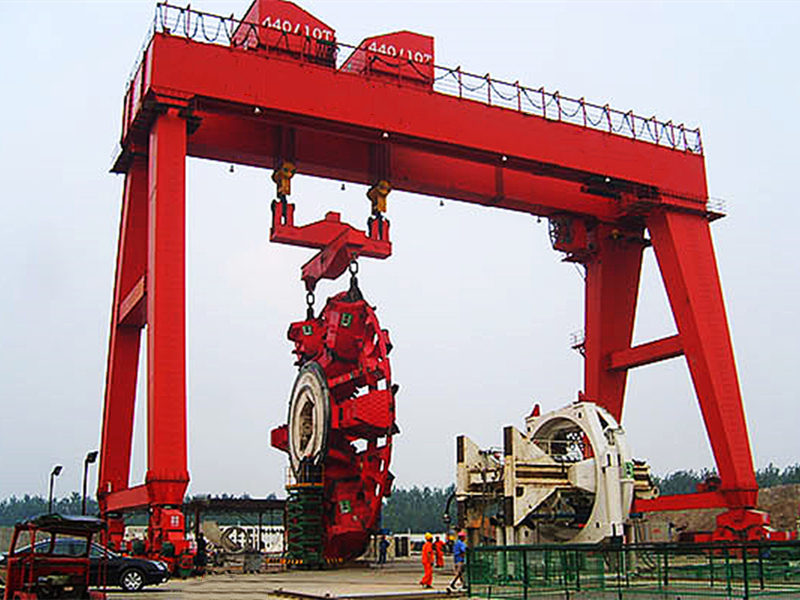
Double girder gantry crane: This type uses two parallel girders, which allows for a higher lifting capacity and a longer span. The double girder gantry crane is used in shipbuilding, steel mills, and other heavy-duty industrial settings.
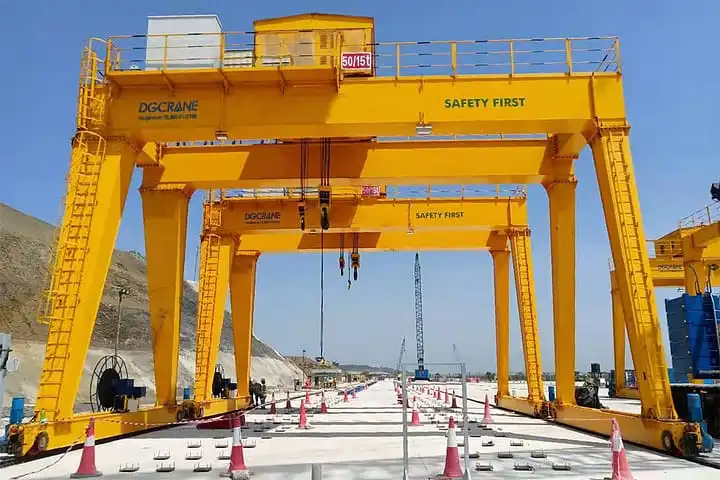
Full gantry crane: A full gantry crane has two legs on both sides of the girder, and both legs run on rails. Vehicles and equipment can pass underneath it, which makes it useful in open work areas.
Semi-gantry crane: One side of the crane rides on a leg, while the other side is supported by an elevated runway, often attached to a building wall. This is a middle option between a full gantry and an overhead crane.
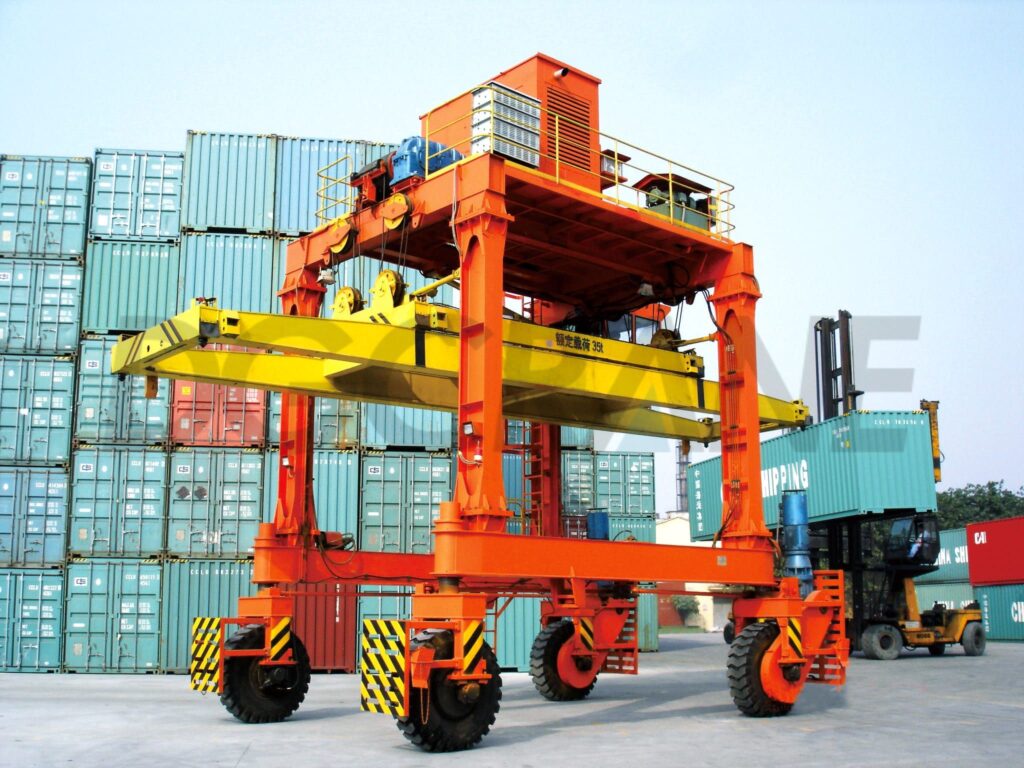
Rubber tyred gantry crane (RTG): RTG cranes run on rubber tires instead of rails, giving them flexibility to move around a container yard. They Rubber tyred gantry cranes are widely used in ports for stacking and moving containers.
Portable gantry crane: Small and often built with adjustable height, portable gantry cranes can be wheeled from one spot to another. They are common in workshops, garages, and maintenance tasks where a permanent crane is not needed.
Truss gantry crane: This type uses a triangular framework instead of a solid beam. It is lighter and offers less wind resistance, which makes it a good fit for outdoor sites.
Rail-mounted gantry crane (RMG): The RMG container gantry cranes run on fixed rails and are common in container yards and rail freight terminals where consistent, repeated movement along the same path is needed.
Ship-to-shore gantry crane (STS): These are large, multi-story cranes used at container terminals to load and unload cargo ships. They run on rails along the dock and are some of the largest gantry cranes in use today.
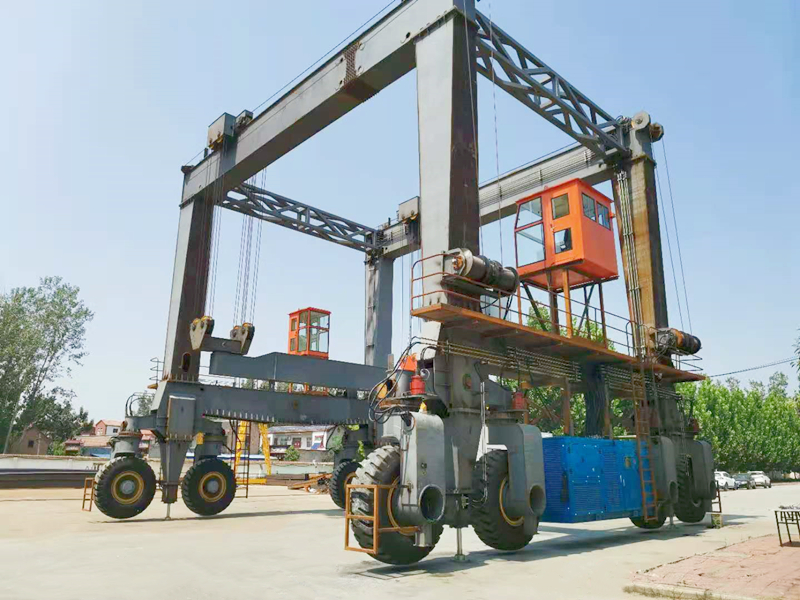
Straddle carrier crane: A straddle carrier crane is designed to lift and transport shipping containers while straddling them. Unlike traditional gantry cranes, it can move independently around ports and container yards, making it ideal for container stacking, loading, and yard transportation.
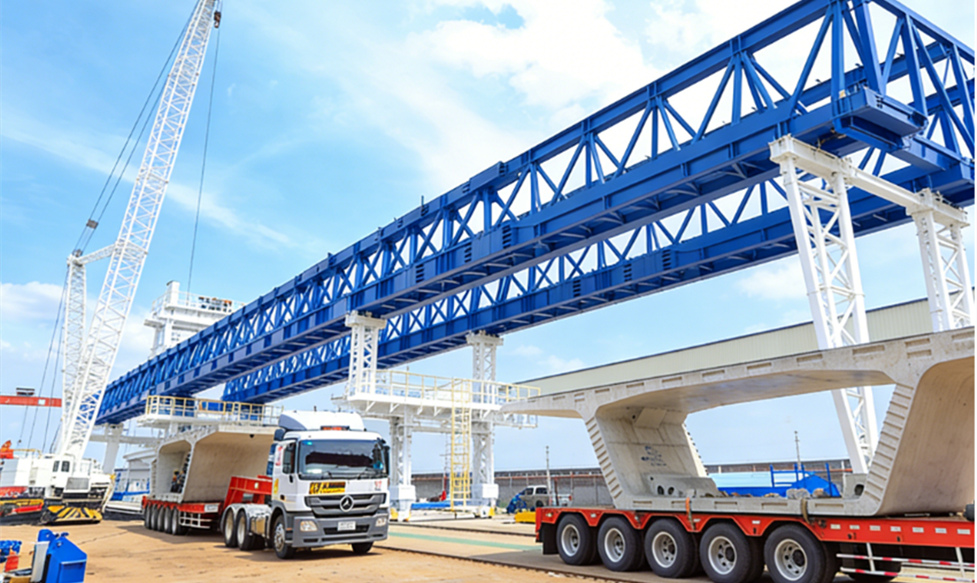
Beam launching crane: A beam launching crane, also called a launching gantry, is used in bridge and elevated highway construction. It lifts, transports, and precisely positions precast concrete beams or girders across bridge spans, allowing construction to continue without extensive ground-based lifting equipment.
How a Gantry Crane Works
Operating a gantry crane follows a simple sequence. The crane is positioned above the load. The hoist lowers a hook or attachment to connect with the load. Once secured, the hoist lifts the load off the ground. The trolley then moves the load along the girder to the desired position, and the crane itself can travel along its rails to reposition the entire structure if needed. Finally, the hoist lowers the load to its destination, and the attachment is released.
Common Applications of Gantry Cranes
Gantry cranes are used across many industries because of their strength, flexibility, and ability to work without building support.
Shipbuilding and shipyards: Gantry cranes lift and position hull sections, engines, and other large ship components during construction and repair.
Port and container terminals: RTG, RMG, and STS cranes handle the loading, unloading, and stacking of shipping containers.
Construction: Gantry cranes lift steel beams, precast concrete panels, and bridge sections on job sites.
Manufacturing plants: They move heavy machinery, raw materials, and finished goods along production lines.
Steel mills and metal fabrication: Gantry cranes handle steel coils, plates, and heavy structural components.
Railway and freight yards: They load and unload coal, timber, ore, and containers.
Precast concrete yards: Gantry cranes move molds and finished concrete elements during production and storage.
Warehousing and logistics: Open-air gantry setups handle loading and stacking where no overhead crane infrastructure exists.
Choosing the Right Gantry Crane
A few factors determine which gantry crane fits a given application.
Lifting capacity: Loads can range from a few hundred kilograms for small workshop cranes to several hundred tons for shipyard and port cranes. Single girder cranes typically handle lighter loads, while double girder cranes are built for heavier duty use.
Span: This is the distance the girder covers between the legs. Larger spans generally call for a double girder or box girder design for added strength.
Duty cycle: This reflects how often and how intensively the crane will be used, including lifts per hour and average load compared to rated capacity. Duty cycle affects the FEM or ISO classification used to design the hoist and structure. Underestimating duty cycle is a common cause of early component failure.
Indoor or outdoor use: Outdoor cranes need corrosion-resistant coatings, sealed electrical parts, and wind protection, while indoor cranes have fewer environmental demands.
Control method: Pendant control works well for most standard applications. Remote control gives the operator freedom to move around the load, while cabin control suits large outdoor cranes where the operator needs a clear line of sight over long distances.
As a trusted gantry crane manufacturer, Nybon Machinery designs and builds reliable lifting solutions for industries with different operational requirements. Whether you need a standard workshop crane or a custom heavy-duty system, choosing the right equipment starts with understanding your application.
Gantry Crane Maintenance
Routine maintenance keeps a gantry crane safe and reliable. This includes lubricating travel wheels and trolley bearings, inspecting wire ropes for wear, checking rail and wheel condition, testing limit switches and safety devices, and examining the structural frame for cracks. Outdoor cranes generally need more frequent inspection due to weather exposure. Keeping detailed maintenance records also supports compliance with lifting equipment regulations.
To Summarize:
A gantry crane is a versatile piece of lifting equipment built to work where overhead cranes cannot. Its freestanding design, wide range of configurations, and ability to handle loads from a few hundred kilograms to hundreds of tons make it a practical solution across shipping, construction, manufacturing, and heavy industry. Understanding the different types, core components, and selection factors helps buyers choose equipment that matches their operational needs and keeps lifting operations safe and efficient.